Burning's Enigma: A Haunting Portrait of Modern Disillusionment
Lee Chang-dong’s Burning isn’t merely a film; it’s an unsettling, slow-burning fever dream that seeps into your consciousness and refuses to leave. Released in 2018, this South Korean psychological thriller doesn’t offer easy answers or comforting resolutions. Instead, it invites you into a world where reality is a shifting mirage, class divides cut deeper than any blade, and the most terrifying monsters wear the most charming smiles. It is a work that demands critical engagement, offering not a narrative to be passively consumed, but a mystery to be actively experienced.

The Unseen Cat and the Vanishing Girl
The film plunges its audience into the isolated, yearning existence of Lee Jong-su (Yoo Ah-in), an aspiring novelist grappling with the quiet desperation of underemployment. His mundane routine as a deliveryman is abruptly shattered by a chance encounter with Shin Hae-mi (Jeon Jong-seo), a childhood acquaintance he barely remembers but who vividly recalls him. Hae-mi, vivacious and uninhibited, quickly draws Jong-su into her orbit, asking him to feed her elusive cat, Boil, while she embarks on a trip to Africa.
Upon her return, Hae-mi introduces Jong-su to Ben (Steven Yeun), a man she met abroad. Ben is everything Jong-su is not: effortlessly wealthy, impeccably dressed, and radiating an unsettling aura of serene confidence. He drives a Porsche, lives in a luxurious apartment, and claims his occupation is simply “playing.” This sudden intrusion transforms their burgeoning, if awkward, connection into an unsettling love triangle, thick with unspoken tensions and simmering jealousy. The narrative, loosely based on Haruki Murakami’s short story “Barn Burning” (which itself references William Faulkner), cleverly shifts from a character study to a psychological thriller, laying the groundwork for a mystery that is less about finding a culprit and more about the nature of perception itself.
The film’s plot setup is masterful in its restraint, never quite revealing its hand. Hae-mi eventually disappears, leaving Jong-su haunted by her absence and increasingly convinced that Ben is involved. The story then becomes Jong-su’s obsessive quest for truth, a journey fraught with ambiguity and the gnawing suspicion that what he perceives may not be reality. This deliberate lack of clarity, as director Lee Chang-dong himself noted, extends the mystery beyond the characters to the very world we inhabit.
A Trio on the Brink: Performances that Hypnotize
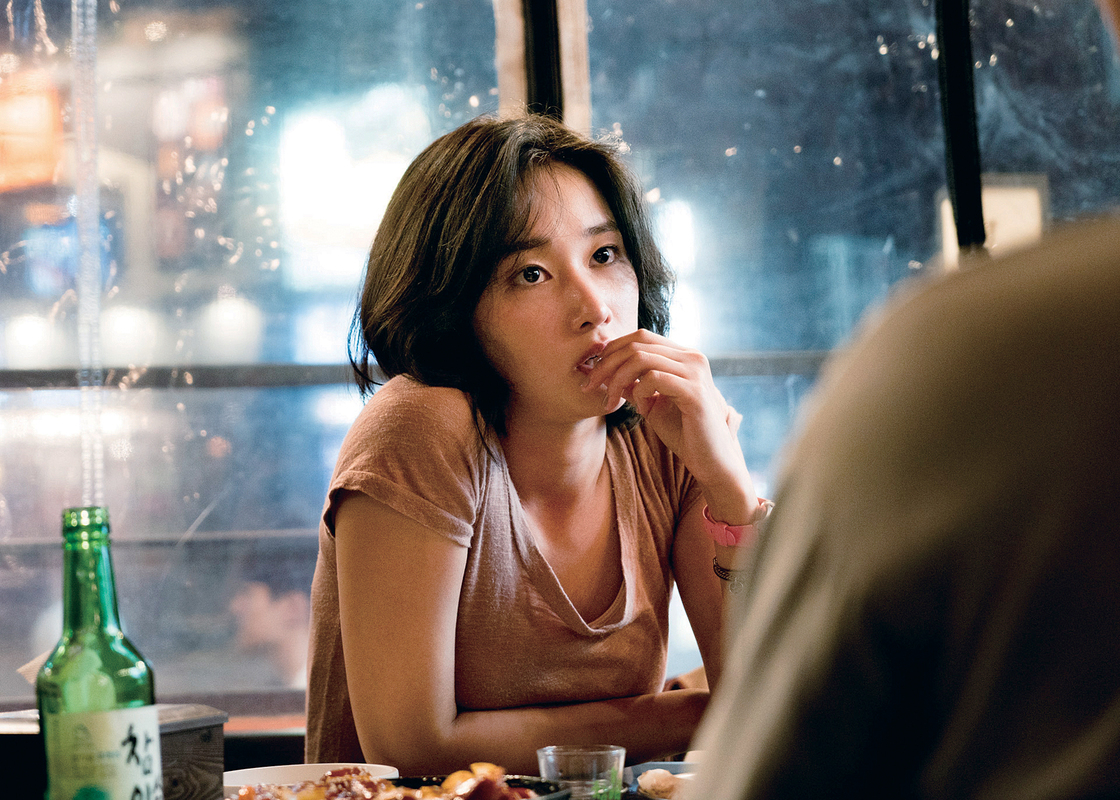
The power of Burning rests squarely on the shoulders of its three leads, who deliver performances of breathtaking nuance and intensity. Yoo Ah-in as Lee Jong-su is a revelation, embodying the quiet rage and alienation of a generation. His portrayal is one of profound internal struggle, a man perpetually on the outside looking in, desperately searching for meaning and belonging in a society that seems to have no place for him. We witness his descent into obsession, fueled by a potent cocktail of infatuation, envy, and a deep-seated class resentment towards Ben’s effortless privilege.
Jeon Jong-seo, in her debut film role, is simply mesmerizing as Shin Hae-mi. She crafts a character who is at once vulnerable and enigmatic, free-spirited yet burdened by unspoken desires. Her iconic interpretive dance at sunset, a moment of raw, unbridled expression, remains one of the film’s most indelible images, capturing her yearning to transcend her circumstances. Hae-mi’s presence, even in absence, is a gravitational force, drawing both Jong-su and the audience into her mystery. Director Lee Chang-dong lauded her as an actress “never before seen in Korean cinema,” praising her raw potential and unpredictable nature.
However, it is Steven Yeun’s portrayal of Ben that truly anchors the film’s unsettling core. Yeun imbues Ben with a chilling, almost feline grace, a man whose charm is as disarming as his smiles are inscrutable. He is the epitome of the “Gatsby-like” figure Jong-su describes – young, rich, and shrouded in an impenetrable mystery. Critics have widely praised Yeun’s “slippery brilliance,” with some calling Ben the “best movie villain in a long time.” His casual confession of an unusual “hobby” — burning abandoned greenhouses every two months — is delivered with a disturbing nonchalance that instantly ignites Jong-su’s suspicions and the audience’s dread.
The Cinematography of Doubt and the Echo of ‘Great Hunger’
Lee Chang-dong’s directorial vision, after an eight-year hiatus, is nothing short of masterful. He crafts a “slow and quiet thriller” that builds tension not through jump scares, but through an insistent, pervasive sense of unease. The pacing is deliberate, allowing scenes to breathe and emotions to simmer, creating a “counter-rhythm of inexorable dread.” This is profoundly enhanced by Hong Kyung-pyo’s breathtaking cinematography, which captures the desolate beauty of the Korean countryside and the stark contrast with Seoul’s urban sprawl. His use of light and shadow, particularly in the aforementioned sunset dance scene, is not merely aesthetic; it’s an extension of the film’s thematic ambiguity, blurring the lines between what is seen and what is imagined.
Mowg’s understated yet potent score further amplifies the film’s haunting atmosphere. Its sparse application ensures that every note resonates, contributing to the pervasive feeling that something is deeply, irrevocably wrong. The film’s thematic richness is perhaps its greatest strength. It delves into “Great Hunger” — the primal yearning for meaning and answers in a world that often provides none. It is a searing indictment of class disparity in modern South Korea, portraying Jong-su’s struggle against Ben’s effortless privilege. The film also subtly explores themes of toxic masculinity and the subjectivity of truth, leaving viewers to question the reliability of Jong-su’s perspective.
Burning was met with widespread critical acclaim, earning the FIPRESCI International Critics’ Prize at the 2018 Cannes Film Festival and achieving the highest-ever score on Screen International’s Cannes jury grid. It has been hailed as one of the best films of the 21st century and was even voted the best Korean film of all time in a poll of over 150 critics, surpassing acclaimed works like Parasite and Oldboy. Its power lies in its refusal to offer concrete resolutions, instead presenting a complex portrait of human desires, obsessions, and the inherent unknowability of the world.
A Legacy of Lingering Questions
Burning is a film that defies easy categorization and resists definitive interpretation. It’s a mystery where the “mystery could be expanded to a mystery about the world that we live in, about the story, the film itself.” Lee Chang-dong deliberately leaves key questions unanswered, prompting endless debate and analysis among its discerning audience. Is Ben a serial killer? Did Hae-mi simply vanish of her own accord? The film thrives in this space of uncertainty, mirroring Jong-su’s own inability to reconcile his perceptions with an objective reality.
This ambiguity is not a flaw, but a profound artistic choice that elevates Burning beyond a mere thriller. It’s a cinematic experience designed to provoke introspection, to make you question what you see, what you believe, and the narratives you construct to make sense of a chaotic world. The film’s lasting impact stems from this deliberate narrative strategy, forcing viewers to engage with its themes long after the final, chilling frame.
Ultimately, Burning is a film that demands patience and rewards contemplation. It’s a meticulously crafted enigma, a chilling meditation on existential dread and societal fissures that will haunt you long after the credits roll. Lee Chang-dong doesn’t just tell a story; he constructs a labyrinth of perception, leaving viewers to grapple with their own interpretations of truth and justice. For those seeking a profound, disquieting cinematic experience that challenges rather than soothes, Burning is an essential, unforgettable watch.
블로그 인기 글
- Train to Busan: A Relentless Journey into Humanity’s Dark Heart
- The Handmaiden: Park Chan-wook’s Dazzling Game of Deceit
- Oldboy: Park Chan-wook’s Enduring Symphony of Vengeance
- Parasite: Bong Joon-ho’s Masterful, Unflinching Look at Class Warfare
- Memories of Murder: A Relentless Pursuit of the Unseen
- The Housemaid: A Twisted Descent into Opulence