Oldboy: Park Chan-wook's Enduring Symphony of Vengeance
There are films that merely entertain, and then there are films that carve themselves into the very fabric of cinematic history, leaving an indelible mark. Park Chan-wook’s 2003 neo-noir action thriller, Oldboy, unequivocally belongs to the latter category. It is not just a movie; it is an experience, a plunge into the abyss of human suffering, obsession, and the devastating futility of revenge, all wrapped in a package of audacious filmmaking that redefined Korean cinema for a global audience. Released on November 21, 2003, this visceral masterpiece arrived like a shockwave, proving that genre cinema could be both brutally entertaining and profoundly philosophical.

The Unfathomable Prison of Oh Dae-su
The premise of Oldboy is a hook of pure, unadulterated dread. Oh Dae-su, portrayed with a raw, animalistic intensity by Choi Min-sik, is an ordinary businessman whose life is violently upended after a drunken night. He is abducted and wakes up in a private, windowless cell, a bizarre urban prison where he remains for fifteen agonizing years. His only companions are a television, through which he learns he has been framed for his wife’s murder, and the relentless march of time. This extended, unexplained captivity transforms him, honing his body into a weapon and his mind into an instrument of singular focus: understanding why this happened and exacting retribution. When he is abruptly released, just as mysteriously as he was imprisoned, Oh Dae-su is thrown into a labyrinthine quest to find his captor, a shadowy figure who offers him a twisted game of cat and mouse. His path quickly intertwines with Mi-do, a young sushi chef played by Kang Hye-jung, whose innocent presence offers a fragile counterpoint to Dae-su’s escalating rage. This is not a simple whodunit; it’s a terrifying exploration of the psychological scars left by prolonged trauma and the terrifying depths of a meticulously planned vengeance.
Choi Min-sik’s performance as Oh Dae-su is nothing short of legendary. His commitment to the role involved significant physical transformation, including losing and gaining weight, undergoing weeks of intensive training, and performing most of his own stunts. He embodies the character’s descent into madness and his ferocious will to survive with a conviction that is both unsettling and magnetic. Opposite him, Yoo Ji-tae as the enigmatic antagonist Lee Woo-jin, delivers a performance of chilling, understated control, a perfect foil to Dae-su’s chaotic fury.
A Canvas of Controlled Chaos and Visual Poetry
Oldboy is a masterclass in visual storytelling, largely thanks to the visionary cinematography of Chung Chung-hoon and Park Chan-wook’s unflinching direction. The film’s aesthetic is characterized by a deliberate use of long takes and tracking shots, techniques that amplify the pervasive sense of tension and unease. The color palette often leans towards claustrophobic blue-greens, trapping the audience within Dae-su’s rancid, inescapable world, even after his physical release.
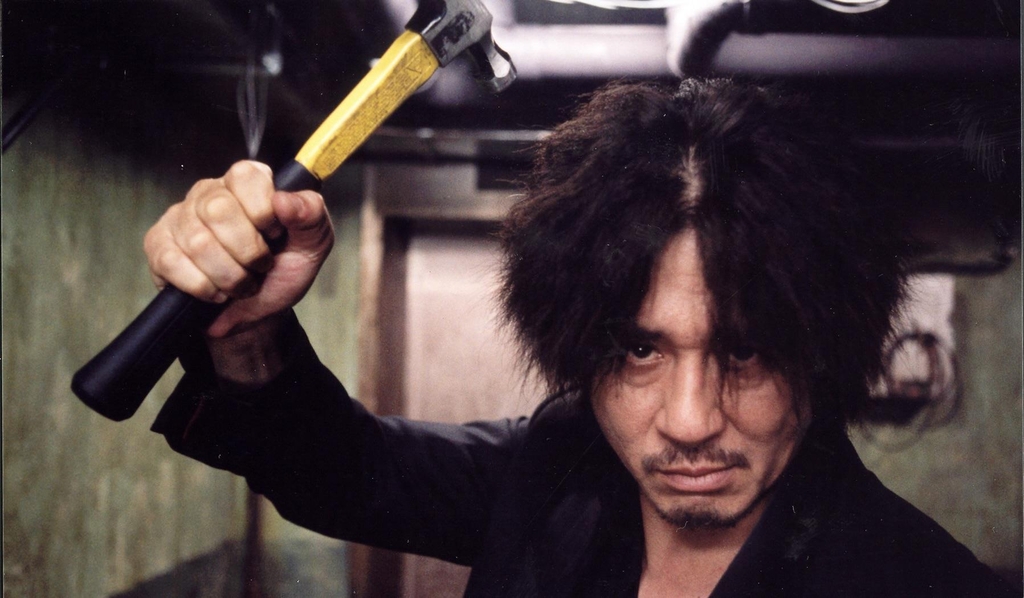
No discussion of Oldboy’s visual prowess is complete without mentioning the iconic hallway fight scene. Shot as a single, uninterrupted tracking shot, this brutal, balletic sequence sees Oh Dae-su, armed only with a hammer, battling a horde of henchmen in a narrow corridor. It’s a raw, exhausting spectacle that foregoes rapid cuts for a continuous, visceral flow, immersing the viewer in every bone-crunching impact. This scene alone cemented its place in cinematic lore, influencing countless action films and solidifying Chung Chung-hoon’s reputation. The film’s score by Jo Yeong-wook further elevates the experience, oscillating between haunting melancholia and escalating urgency, perfectly underscoring the narrative’s emotional swings.
The Echo of Vengeance and Critical Acclaim
Upon its release, Oldboy was not merely well-received; it was lauded as a groundbreaking achievement. It quickly gained domestic success, attracting over 3.26 million filmgoers in South Korea and ranking as the fifth highest-grossing film of 2003. Its international acclaim, however, truly propelled it into the global spotlight. The film won the coveted Grand Prix at the 2004 Cannes Film Festival, marking the first time a Korean film received the festival’s second-highest honor. Quentin Tarantino, who presided over the jury that year, was a vocal champion of the film.
Critics worldwide praised its audacious narrative and stylistic daring. Roger Ebert, a discerning voice in American film criticism, famously stated that Oldboy is a “powerful film not because of what it depicts, but because of the depths of the human heart which it strips bare.” On Rotten Tomatoes, the film holds an impressive 82% approval rating, with critics consensus noting its violent yet powerful tale of revenge. Metacritic similarly reported “generally favorable reviews” with a score of 78 out of 100. Beyond its shocking twists and graphic violence, critics highlighted its profound exploration of vengeance, guilt, and fate, with some even drawing parallels to Greek tragedy like Oedipus Rex. It’s not a film that glorifies revenge; rather, as director Park Chan-wook himself noted, it explores the destructive consequences when anger and vengeance are not constructively expressed.
Often cited as a pivotal work in the global rise of Korean cinema, Oldboy is more than just a revenge thriller; it’s an anti-revenge story, a harrowing examination of how the pursuit of retribution can lead to deeper, unforeseen horrors. Its enduring impact was further underscored by a successful 20th-anniversary 4K re-release in the United States in August 2023, which grossed over $1.26 million in limited theatrical screenings, a testament to its lasting power.
The Unforgettable Echo
Oldboy is not for the faint of heart. It is a relentlessly dark, disturbing, and occasionally grotesque film that demands its audience confront uncomfortable truths about humanity’s capacity for cruelty and obsession. Yet, to dismiss it solely for its challenging content would be a grave oversight. This is cinema at its most potent: a meticulously crafted psychological odyssey that uses extreme circumstances to delve into the very core of human nature. Park Chan-wook’s Oldboy is an essential viewing experience for anyone who appreciates film as an art form capable of provoking thought, eliciting strong emotions, and leaving an unforgettable, haunting impression. It is a masterpiece of modern cinema, a brutal yet beautiful exploration of what happens when the desire for revenge consumes everything in its path, leaving only devastation in its wake. Watch it, and be prepared to be unsettled, challenged, and utterly captivated by its dark genius.