Train to Busan: A Relentless Journey into Humanity's Dark Heart
The screech of metal on metal, the claustrophobic confines of a high-speed train, and the relentless, snarling tide of the undead – these are the visceral elements that Train to Busan hurls at its audience. Released in 2016, this South Korean action horror thriller, directed by Yeon Sang-ho, isn’t just another zombie flick; it’s a harrowing exploration of human nature under duress, driven by relentless action and poignant performances. It arrived at a time when the zombie genre felt exhausted, yet managed to reanimate it with a ferocious energy and an emotional core that resonated globally.
The Apocalypse on Rails
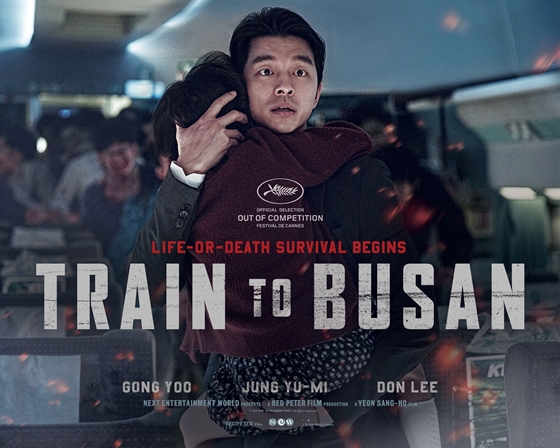
The premise is deceptively simple: a workaholic fund manager, Seok-woo (Gong Yoo), estranged from his young daughter, Su-an (Kim Su-an), grudgingly escorts her on a KTX bullet train from Seoul to Busan to see her mother. What begins as a tense, quiet journey between a neglectful father and his observant child quickly devolves into a nightmare. Just as the train departs, an unidentified viral outbreak sweeps across South Korea, transforming people into hyper-aggressive, flesh-craving zombies. The train itself becomes a rapidly moving coffin, trapping a diverse group of passengers in a desperate fight for survival, their destination—Busan, a city rumored to be a safe zone—their only hope.
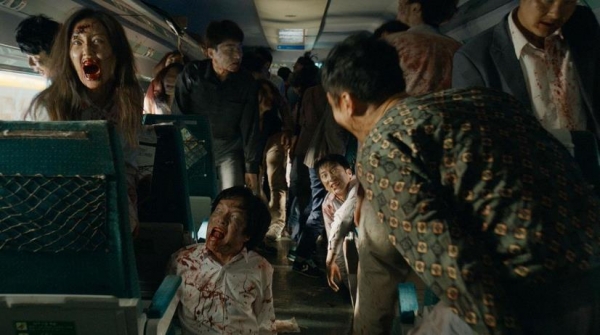
Director Yeon Sang-ho, renowned for his animated features, brings a kinetic, almost animated sensibility to his first live-action film. The enclosed setting of the train, with its narrow corridors and interconnected cars, is utilized to perfection, creating a sense of inescapable dread. The zombies themselves are a terrifying force: fast, twitching, and piling over each other in a grotesque, relentless wave. Every lurch of the train, every dark tunnel, amplifies the tension, making for a truly breathless experience where the action rarely lets up.
Beyond the Bites: A Human Drama Unfolds
What elevates Train to Busan beyond mere spectacle is its profound focus on character and the stark moral choices faced by its survivors. Gong Yoo delivers a compelling performance as Seok-woo, evolving from a self-absorbed businessman to a fiercely protective father, his journey of redemption forming the emotional backbone of the film. His relationship with his daughter, Su-an, portrayed with remarkable maturity by Kim Su-an, is a poignant anchor amidst the chaos.
However, it’s Ma Dong-seok as the gruff but heroic Sang-hwa, a soon-to-be father protecting his pregnant wife Seong-kyeong (Jung Yu-mi), who often steals the show. Sang-hwa embodies selfless courage, becoming an audience favorite for his unwavering determination and formidable strength against the undead. In stark contrast, Kim Eui-sung’s portrayal of Yon-suk, a selfish, high-ranking executive, serves as a chilling mirror to humanity’s darkest instincts, highlighting how fear and self-preservation can turn people into monsters far more reprehensible than the zombies themselves. The film masterfully weaves these individual narratives, creating a tapestry of sacrifice, betrayal, and unexpected heroism that resonates long after the credits roll.
A Global Phenomenon, Critically Acclaimed
Upon its release on July 20, 2016, Train to Busan was not merely a success; it was a phenomenon. The film shattered box office records in South Korea, becoming the first Korean film of 2016 to exceed 10 million theatergoers and the highest-grossing film in the country that year. Its worldwide gross reached an impressive $98.5 million on a modest budget of $8.5 million, making it a global commercial triumph. It also set records as the highest-grossing Korean film in Malaysia, Hong Kong, and Singapore.
Critics were overwhelmingly positive, with Rotten Tomatoes reporting a 95% approval rating. Reviewers consistently praised its intense action, emotional depth, and astute social commentary. Jeannette Catsoulis of The New York Times lauded its depiction of class warfare, while Brian Tallerico of RogerEbert.com highlighted its unique take on the zombie genre with “fully realized characters and plenty of social commentary.” Audiences, too, were captivated, commending its relentless pacing, believable scenario, and the powerful emotional impact of the father-daughter storyline. The film’s ability to blend visceral horror with a compelling human drama and sharp critiques of societal selfishness cemented its status as a genre-redefining work.
Unforgettable Imagery and Sound
The technical prowess of Train to Busan is undeniable. Director Yeon Sang-ho, with cinematographer Lee Hyung-deok, crafts a visually dynamic experience that maximizes the tension of the setting. The camera work is fluid, capturing both the frantic chaos of zombie attacks and the intimate moments of human connection. The quick, contorted movements of the infected are genuinely unsettling, a testament to effective choreography and visual effects that make them feel horrifyingly real. Sound design plays a crucial role, from the chilling snarls of the zombies to the desperate cries of the survivors, all underscored by Jang Young-gyu’s impactful score, which heightens every suspenseful moment and emotional beat. The film’s editing maintains a relentless, fast rhythm, particularly in its action sequences, creating a sense of urgency that rarely wanes.
Train to Busan is a masterclass in tension, character, and genre reinvention. It isn’t just a film about escaping zombies; it’s about confronting the monsters within humanity itself. The journey is brutal, heartbreaking, and ultimately, unforgettable, proving that even in the most saturated genres, a fresh perspective and genuine heart can create something truly exceptional.